

Master Registry
Master Registry provides a controlled research entrance with documented sources, status labels, stable records, and links to related work.
Master Registry
The reconciled full-text master contains 895 unique records. It combines preserved published-archive articles with newer completed packages while retaining source-member provenance.
Corpus Counts
- Newer completed package: 531
- Published archive: 364
Public Entrances
- Complete Published Archive — 363 verified URLs
- Ten Backbone Series
- Textual Issues
- Research Tools
Unified research catalogue
Explore Research Center records
Search published records by title, passage, person, source, edition, doctrine, language, period, review state, or permanent ID.
VAR-0003 · Variant · Preliminary
Adverse canonical and preservation entailment established
Mark 16:9–20: The Longer Ending
Did Mark end at 16:8, or do the resurrection appearances, commission, ascension, and apostolic conclusion in verses 9–20 belong?
Open controlled recordDOS-0002 · Dossier · Preliminary
God Manifest in the Flesh: 1 Timothy 3:16
A complete dossier on θεός, ὃς, and ὅ, including Metzger’s committee report, Newton’s anti-Trinitarian use, and the received-text case.
Open controlled recordVAR-0002 · Variant · Preliminary
Adverse entailment established
1 Timothy 3:16: God Manifest in the Flesh
The received reading explicitly identifies the incarnate Christ as God; the critical pronoun removes that direct testimony and has documented anti-Trinitarian use.
Open controlled recordVAR-2029 · Variant · Preliminary
Adverse entailment established
Mark 8:35 — “For My Sake and the Gospel’s”: Is the Gospel Clause Authentic?
The received and principal critical texts include both loyalties: Christ and the gospel. A limited variant omits the gospel clause, often under influence from the shorter Synoptic parallels.
Open controlled recordVAR-2020 · Variant · Preliminary
Adverse entailment established
Mark 6:22 — Herodias’s Daughter or Herod’s Daughter Herodias?
The received reading identifies the dancer as Herodias’s own daughter. A difficult critical form can be read as Herod’s daughter named Herodias, conflicting with the narrative’s next identification.
Open controlled recordVAR-2012 · Variant · Preliminary
No adverse entailment · agrees with the received text
Mark 3:32 — “Thy Brethren and Thy Sisters”: Does the Reference to the Sisters Belong?
Some witnesses tell Jesus that his mother, brothers, and sisters are outside. The received text mentions only his mother and brothers, agreeing with the family’s arrival and Jesus’ reply.
Open controlled recordVAR-2010 · Variant · Preliminary
No adverse entailment · agrees with the received text
Mark 3:14 — “Whom He Also Named Apostles”: Addition or Omission?
The Textus Receptus moves from the appointment of the Twelve directly to their purpose. Many witnesses insert “whom he also named apostles,” the exact naming clause found in Luke 6:13.
Open controlled recordVAR-2002 · Variant · Preliminary
No adverse entailment · agrees with the received text
Mark 1:2 — “In the Prophets” or “in Isaiah the Prophet”? The Opening Citation
Mark introduces a composite citation with either “in the prophets” or “in Isaiah the prophet.” The difference forces a question about quotation formulas, not about whether Scripture contains an error.
Open controlled recordVAR-2001 · Variant · Preliminary
No adverse entailment · agrees with the received text
Mark 1:1 — “Jesus Christ, the Son of God”: Does the Full Title Belong?
The opening line of Mark varies at its final title. The question is not whether Mark presents Jesus as God’s Son, but whether “the Son of God” stood in the Gospel’s first sentence.
Open controlled recordVAR-2281 · Variant · Preliminary
No adverse entailment · agrees with the received text
Acts 20:21 — “Faith toward Our Lord Jesus Christ”: Does “Christ” Belong?
Scrivener includes Χριστόν along with two articles that make the repentance-and-faith balance more explicit.
Open controlled recordVAR-2267 · Variant · Preliminary
No adverse entailment · agrees with the received text
Acts 16:17 — “Which Show unto Us the Way of Salvation”: Us or You, the Way or a Way?
The central pronoun is ἡμῖν, ‘to us,’ in Scrivener and ὑμῖν, ‘to you,’ in SBLGNT and NA28.
Open controlled recordVAR-2266 · Variant · Preliminary
No adverse entailment · agrees with the received text
Acts 16:12 — Chief City, First District, or Roman Colony? The Description of Philippi
The Greek wording around πρώτη and μερίς is notoriously difficult.
Open controlled recordVAR-2254 · Variant · Preliminary
Adverse entailment established
Acts 13:33 — “Unto Us Their Children”: The Resurrection and the Second Psalm
NA28 agrees with Scrivener’s αὐτῶν ἡμῖν, ‘to us their children,’ while SBLGNT follows ἡμῶν, producing ‘to us, their children’ or ‘to our children’ depending construction.
Open controlled recordVAR-2256 · Variant · Preliminary
Adverse entailment established
Acts 14:3 — “Bearing Witness unto the Word of His Grace”: Does the Preposition Belong?
Scrivener, SBLGNT, Tregelles, and the Byzantine reconstruction use the dative article alone.
Open controlled recordPER-3100 · Person · Preliminary
Textual authority model: Ministerial
Huldrych Zwingli
Huldrych Zwingli was the leading early reformer of Zürich.
Open controlled recordPER-3099 · Person · Preliminary
Textual authority model: Magisterial
Günther Zuntz
Günther Zuntz was a German-born classical scholar and papyrologist who worked in Britain after leaving Nazi Germany.
Open controlled recordPER-3098 · Person · Preliminary
Textual authority model: Ministerial
John Wycliffe
John Wycliffe was an Oxford-trained English theologian whose disputes over ecclesiastical property, papal power, preaching, and the authority of Scripture helped form the late-medieval reform movement later called Lollardy.
Open controlled recordPER-3094 · Person · Preliminary
Textual authority model: Magisterial
Johann Jakob Wettstein
Johann Jakob Wettstein was a Swiss-born scholar and manuscript collator whose Amsterdam Greek New Testament offered an extensive apparatus and abundant parallels from classical, Jewish, and patristic literature.
Open controlled recordPER-3092 · Person · Preliminary
Textual authority model: Magisterial
Julius Wellhausen
Julius Wellhausen was a German biblical scholar and orientalist whose Prolegomena to the History of Israel gave classic form to the documentary hypothesis and a developmental account of Israelite religion.
Open controlled recordPER-3096 · Person · Preliminary
Textual authority model: Magisterial
James R. White
James R.
Open controlled record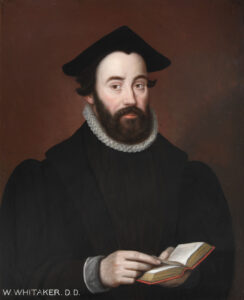
PER-3095 · Person · Preliminary
Textual authority model: Ministerial
William Whitaker
William Whitaker was a Cambridge theologian and one of the foremost English Protestant controversialists of the late sixteenth century.
Open controlled record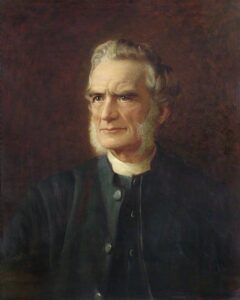
PER-3093 · Person · Preliminary
Textual authority model: Magisterial
Brooke Foss Westcott
Brooke Foss Westcott was an Anglican scholar, bishop, member of the New Testament Revision Company, and co-editor with Fenton John Anthony Hort of The New Testament in the Original Greek.
Open controlled recordPER-3097 · Person · Preliminary
Textual authority model: Magisterial
Peter J. Williams
Peter J.
Open controlled recordPER-3091 · Person · Preliminary
Textual authority model: Magisterial
Bernhard Weiss
Bernhard Weiss was a German Lutheran New Testament scholar, commentator, introduction writer, and editor of a critical Greek text.
Open controlled record