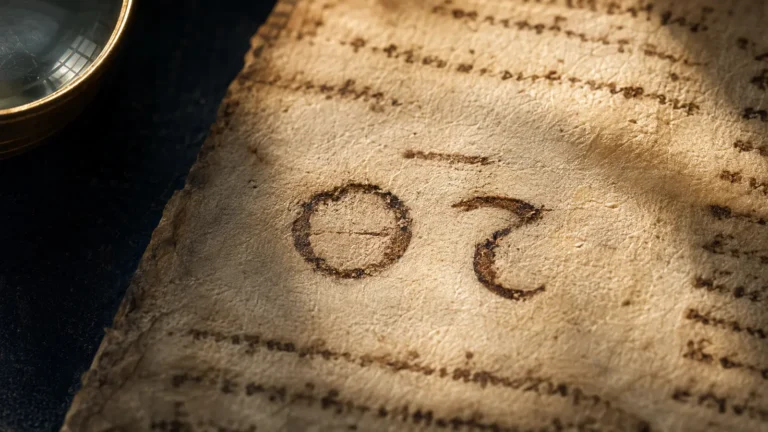
Post · October 6, 2026A modern apparatus gives a necessary editorial summary, not a time machine. Alexandrinus must be judged through its material history, dated observers, transmissional possibilities, and ecclesiastical reception.
Open record → Post · September 29, 2026Θεός produces an explicit confession of the incarnation, fits the grammar, and agrees with Scripture’s repeated identification of Christ as God. Canonical harmony is not a substitute for…
Open record → Post · September 22, 2026Sacred contractions undeniably save space, but economy does not explain why Christians selected God, Lord, Jesus, and Christ. The evidence points first to reverence—and warns how reverence can…
Open record → Post · September 15, 2026A fading theta can become an omicron to the eye. That supplies a credible route from θεός to ὅς—but the hypothesis must not be exaggerated into a claim…
Open record → Post · September 8, 2026Woide reportedly saw the trace in 1765 but not in 1785. Scrivener saw a faint remnant in 1861. Their testimony makes deterioration part of the textual evidence.
Open record → Post · September 1, 2026The strongest historical objection came from a scholar who first acknowledged the fine stroke and later denied it. Wettstein’s reversal must be heard fairly—but it does not erase…
Open record → 
