

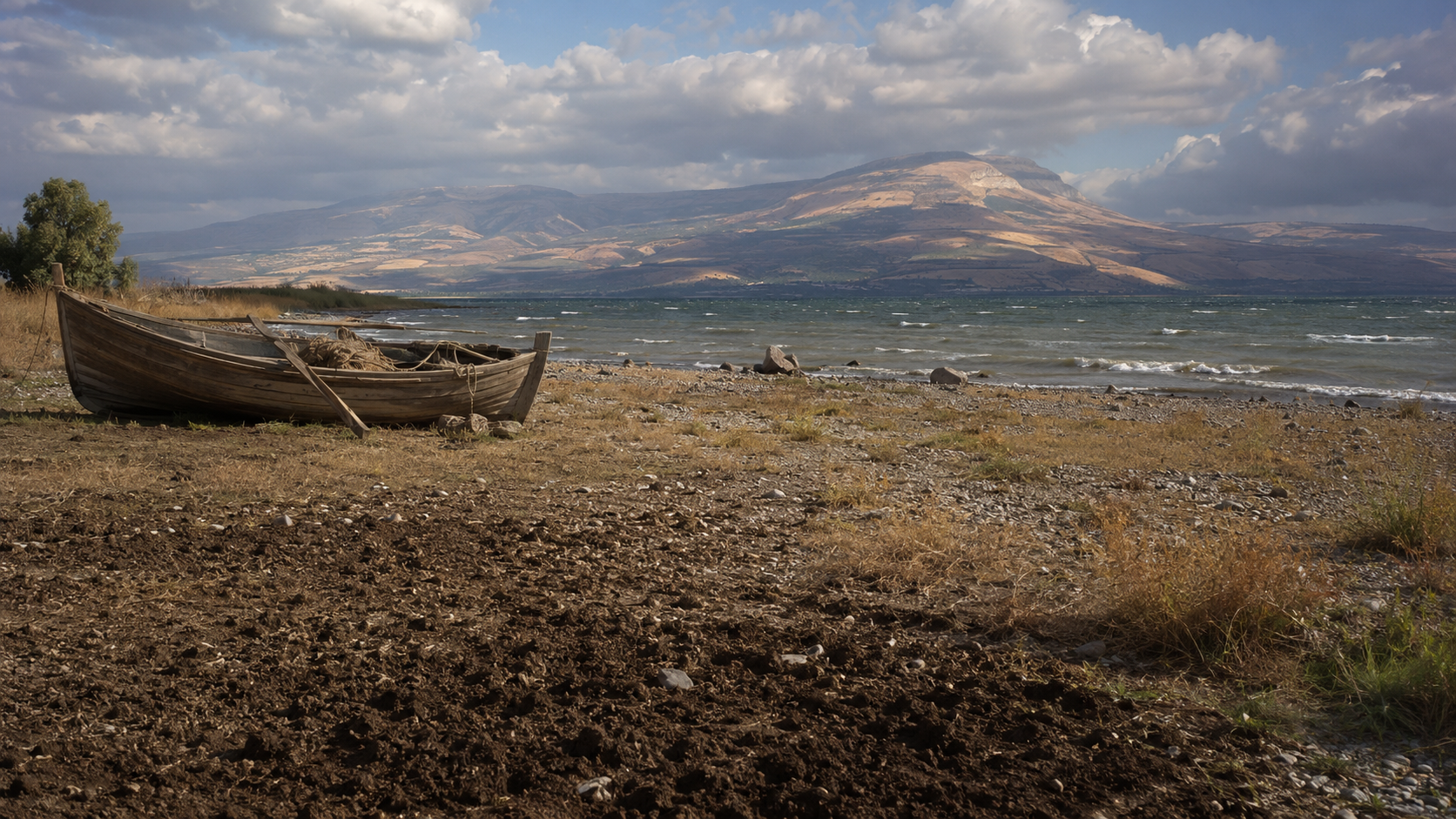
The mountain beside Galilee becomes a field hospital. People lay the lame, blind, dumb, maimed, and many others at Jesus’ feet. Matthew then names the change in each body. The manuscripts vary in the order of the list, and some drop “the maimed to be whole.”
“They saw the dumb to speak, the maimed to be whole, the lame to walk, and the blind to see.” — Matthew 15:31
The usual critical text retains the maimed and their wholeness. Once again, the central received phrase is not a reading modern editors uniformly reject.
Lists invite rearrangement. A scribe may line the healings up with the order in which the sick were named in verse 30. Another may group speech and sight, or move a phrase to make the clauses sound alike. The Greek endings also repeat, so one item can fall between neighboring items without leaving broken grammar.
“The maimed to be whole” is especially exposed. A lame person walking and a maimed person made whole may seem to say nearly the same thing. But maimed points beyond weak legs. It can describe a damaged or missing limb. Whole answers that ruin. Matthew is not piling synonyms; he is widening the scene.
The phrase has ancient and broad support, though its position shifts. Variation of position sometimes raises suspicion that words entered from a margin. It can just as readily show that a lost line was restored at different points. When a clause is both difficult to omit intentionally and easy to lose mechanically, restoration explains the scattered positions well.
Israel’s God on the mountain
The crowd “glorified the God of Israel.” That close matters. Jesus does works tied to the prophetic hope: blind eyes open, deaf ears hear, the lame walk, and ruined bodies are restored. Gentiles in the region see Israel’s Messiah display Israel’s God.
The line does not teach that every believer will receive bodily healing now. It records the King’s sign and gives a pledge of the final restoration. The same Jesus soon feeds the multitude, joining created strength to created food.
The received order lets the report gather speed: dumb speak, maimed become whole, lame walk, blind see. Other orders tell the same wonders, but the settled text need not be rebuilt around every ancient rearrangement. Keep the full list. No broken body lay beyond the reach of the man at whose feet they were cast.
The phrase “maimed made whole” may imply restoration beyond ordinary healing. A damaged limb is not merely strengthened; wholeness answers loss. That helps explain why a scribe could find the line startling or why a reader might treat it as a redundant expansion. The very specificity that raises doubt also gives the report its distinct witness.
Matthew says the crowds cast the afflicted at Jesus’ feet. The verb pictures urgency and helplessness, not contempt. The people can bring bodies into his presence; they cannot perform the restoration. His healing then leads them to glorify the God of Israel.
This Gentile-region praise anticipates the Gospel’s widening horizon. Israel’s Messiah makes the nations marvel at Israel’s God. The full list shows the breadth of mercy before the bread is multiplied for the waiting multitude.
Sources and further reading
- Isaiah 29:18–19; 35:5–6; Matthew 15:29–39.
- Bruce M. Metzger, A Textual Commentary on the Greek New Testament, note on Matthew 15:31.
- Frederick H. A. Scrivener, A Plain Introduction to the Criticism of the New Testament.
Comments
Share a question or response to this article.