

This is Part 5 of “The Line That Vanished.”
A case that never states its strongest objection is an advertisement, not an argument. The strongest historical objection to the fading-theta account is Johann Jakob Wettstein’s change of mind.
Wettstein was no casual observer. He was an accomplished collator whose work helped shape later New Testament criticism. His two inspections of Alexandrinus cut in opposite directions.
That last sentence needs refinement. The evidence for the first inspection reaches us through Berriman’s report of what Wettstein said to an intermediary; the mature contrary judgment appears in Wettstein’s own published account. The two stages therefore differ not only in conclusion but in documentary form. Even so, the reversal is real enough to demand an article of its own.
Wettstein’s importance extends beyond this one letter. He inspected major manuscripts, developed conventions that helped lead to the later Gregory–Aland system of sigla, and thought carefully about the weighing of variants. Castelli’s study places his treatment of 1 Timothy 3:16 within a larger struggle over critical freedom, theological accusation, and the rules by which orthodox readings should be evaluated.1 To dismiss him as merely hostile to Christ’s deity would evade the evidential question and repeat the vice for which polemical textual criticism is rightly criticized.
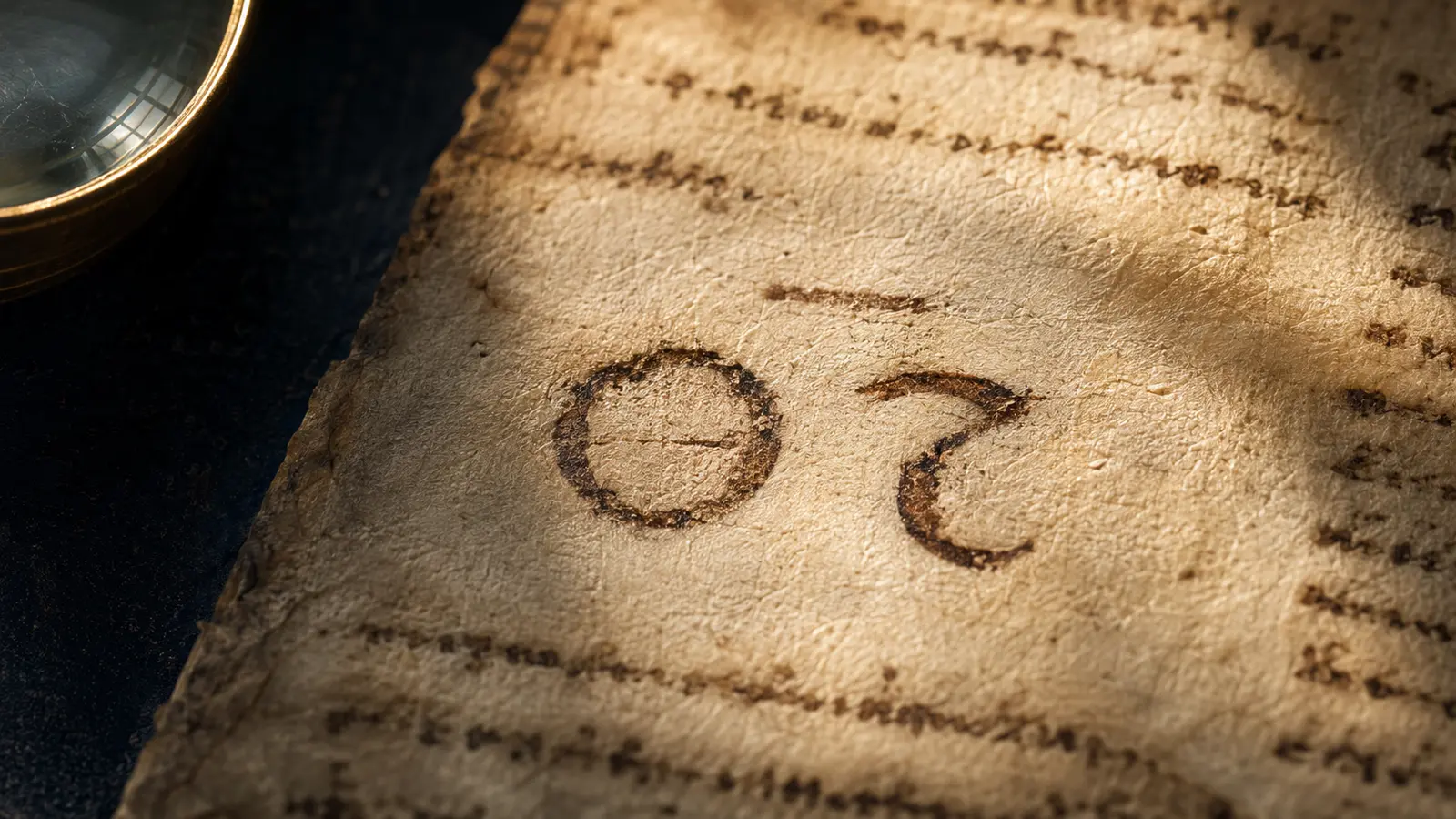
The exact issue is whether the faint line reported by Mill and Berriman belonged to the theta on the front of the leaf or to an epsilon visible from the reverse. Wettstein’s later explanation is powerful because it identifies a concrete alternative source for the mark. It must be tested as a material claim, not psychoanalyzed away.
The first inspection
Wettstein examined Alexandrinus in 1716. According to the contemporary account later published by Henry Berriman, he acknowledged the original fine transverse stroke at the ends of the stronger line. This aligned substantially with Mill’s report: the middle had been strengthened, while remnants of older ink could be perceived at the extremities.2
Henry Wotton responded in 1718 and argued that the manuscript had always read ΘC. On this account, Patrick Young had merely renewed the fading stroke. The controversy was therefore already fully formed: original reading, later retracing, and the evidential significance of a thin remnant.
Castelli notes that Wettstein first saw Alexandrinus during his early London work—her broader chronology places an inspection in 1715, while Berriman’s later narrative connects the particular acknowledgment with 1716. The difference should not be hidden under false precision. What matters for the present argument is that Wettstein encountered the codex in the mid-1710s, while the fine appearance described by Mill was still a live subject of observation.
Berriman says that Wettstein acknowledged the fine stroke at the ends of the fuller later one and that the discovery had been entered on a loose paper which was misplaced when the relevant account was written. This is valuable but mediated testimony. We do not possess the loose note. We possess Berriman’s published representation of a report transmitted through a friend, probably John Kippax.3
That documentary limitation prevents a confident claim that Wettstein left a formal early verdict for ΘC. It does permit the more cautious conclusion that contemporaries understood his first inspection to confirm the phenomenon Mill described. His later account is best read against that background: he did not simply encounter a pristine ΟC and remain consistent. He revisited an appearance that had already occasioned contrary interpretations.
The theological atmosphere was heated. A reading that explicitly named “God” could be portrayed as orthodox, while a relative pronoun could be treated with suspicion even though it did not deny the incarnation. Wettstein faced accusations touching his orthodoxy and had reason to explain his judgment carefully. The pressure could cut either way: fear might drive a critic toward the received reading, while resistance to ecclesiastical coercion might make the harder reading emblematic of scholarly freedom. Neither possibility decides what lay on the parchment.
The reversal
By 1730 Wettstein favored ΟC. He reinspected the codex during a second English visit in 1746, and in his published account of 1751 gave the mature explanation for his changed judgment. What appeared to be an old transverse line, he argued, was not original ink forming theta. Rather, it was part of an epsilon written on the reverse side of the parchment, in the text of 1 Timothy 6:3, showing through the thin leaf.4
This explanation has genuine force. Alexandrinus is written on parchment, not opaque modern paper. Writing from the verso can be visible through a thin, worn leaf. An examiner who knows what lies on the reverse may realize that an apparent mark belongs to the other side.
The objection must not be caricatured as mere critical hostility. It proposes a concrete physical source for the apparent trace.
The chronology disciplines the way the reversal is described. Wettstein favored ΟC in his 1730 Prolegomena, reinspected during the 1746 journey, and published the developed show-through explanation in 1751. It is inaccurate to place all those events in one year or to say that he first devised the objection on the page where modern readers encounter it.
In the 1746 episode as reconstructed by Castelli, Wettstein and an old friend examined the passage with the naked eye and various glasses. He found the line toward the left but described it as seeming to vanish when he tried to show it. By changing the way light fell through the leaf, the observers connected the appearance to the reverse-side epsilon.5 The account is not a bare denial of Mill’s mark; it is an attempt to reproduce and explain it.
This explanation benefits from the physical state of parchment. A thin leaf can allow a dark verso letter to appear within the outline of a recto letter. If the sagitta of an epsilon crosses the apparent omicron at or near the expected height, an observer looking for a diameter may join what belong to different sides. The phenomenon would be especially treacherous under transmitted light.
The received-text reply is also physical. Scrivener and Burgon argued that the verso stroke crosses too high and covers too little of the expected diameter to account for all that earlier observers reported. They allowed that part of the epsilon intersects the area but denied that this fact was relevant to the old trace at issue. Their objection cannot be settled by saying merely that an epsilon exists on the back. Alignment and extent matter.6
Thus the two models share one observation—the reverse writing is visible—and dispute its explanatory sufficiency. The critical model says it generated the supposed old line. The restorative model says it may overlap the area but does not exhaust the reported recto trace.
What the reversal proves—and what it does not
Wettstein’s later judgment proves that a qualified observer could inspect the codex and conclude that the trace was illusory. It does not prove that every earlier observer saw only show-through.
Several questions remain:
- Why did Wettstein himself initially acknowledge the fine stroke?
- Did the apparent mark align exactly with the reverse-side epsilon at every point?
- How should Berriman’s report of a trace particularly at the left edge be explained?
- Did changing light, angle, pressure, and growing translucence alter what could be distinguished?
- Could an original trace and reverse-side show-through overlap?
- How much additional wear occurred between the inspections?
We should resist pretending that we can answer all of these from a modern reproduction. The responsible conclusion is that Wettstein created a serious alternative explanation, not that his second look retroactively nullified every first look.
The words serious alternative are deliberately chosen. An alternative becomes serious when it explains the same datum by an independently attested mechanism. Show-through is visible on thin parchment; an epsilon stands on the reverse; Wettstein claimed that manipulating the viewing conditions made the apparent line disappear. That is enough to prevent the old-trace report from functioning as uncontested proof.
It is not enough to establish that the first hand must have written ΟC. For that conclusion, the show-through model must explain the entire fine appearance described at both ends, the repeated testimony across decades, and the observers’ distinction between old and new marks. If some part of the reported line extends beyond the verso stroke, the model is incomplete. If the earlier witnesses were looking under different conditions and at a less damaged surface, the later demonstration may not reproduce their object.
Wettstein’s age at the second inspection is sometimes introduced as though eyesight alone decided the matter. That is speculative. A mature scholar may possess better judgment and worse vision; a younger scholar may have sharper sight and less interpretive experience. The evidence lies in the account of the mark, not in an amateur diagnosis of the observer.
The same restraint applies to charges of doctrinal motive. Burgon’s description of Wettstein’s eyes failing whenever a text supported Christ’s Godhead is memorable invective, not material analysis. A modern confessional article need not repeat it. If Wettstein’s theology influenced his criticism, that influence must be shown through his arguments and choices. Even then, the reverse-side epsilon remains where it is.
An argument strong enough for publication should be able to say: “Wettstein may be right about the line, and here is why we nevertheless judge the cumulative evidence differently.” Anything weaker turns confessional certainty into historical defensiveness.
The danger of the last observer
There is a subtle chronological fallacy in much discussion of damaged artifacts: the last observer is treated as though he stood closest to the original state. He did not. He stood latest.
A later observer may possess better technique and more accumulated knowledge. He may also confront less surviving ink and more damage. In this instance, Griesbach would soon complain that the place had been so worn by curious handling that certainty was no longer possible. Woide reportedly saw a trace in 1765 and could not see it twenty years later. Deterioration is part of the evidence.
Wettstein’s later inspection deserves weight because of his competence and his specific verso explanation. The earlier inspections deserve weight because they occurred before further loss and because several observers described a fine line distinct from the later heavy one.
The temporal asymmetry can be illustrated without privileging either side. Suppose an inscription is photographed in 1900, copied in 1950, and nearly effaced by 2000. A careful observer in 2000 may have superior equipment but an inferior object. His inability to see a letter does not refute the photograph. Conversely, an early hand-copy may contain an error that later imaging exposes. Date and technique must be weighed together.
Alexandrinus presents the harder case because the early evidence is verbal, the page was retouched, and the rival mark lies on the verso. The oldest observers did not supply calibrated images. The later observers did not have the oldest surface. Certainty should therefore decrease, not increase, when a modern summary hides the loss.
Wettstein himself described an appearance sensitive to viewing conditions. That very sensitivity cautions against treating any single inspection as the last word. A line that alternately appears and disappears may be show-through, a shallow remnant, or an interaction of both. The report proves that the artifact was visually unstable under examination.
A genuinely historical judgment
The dispute cannot be resolved by counting famous names. Mill and Berriman do not become right merely because they are early. Wettstein does not become right merely because modern editions agree with his later conclusion.
The evidentiary task is comparative:
| Explanation | Accounts for faint older trace | Accounts for dark later ink | Accounts for reverse-side alignment | Accounts for progressive disappearance |
|---|---|---|---|---|
| Original ΟC, later changed to ΘC | Possibly, as show-through or misperception | Yes | Yes | Partly |
| Original ΘC, later retraced | Yes | Yes | Possibly coincidental or overlapping | Yes |
Both models explain significant portions of the record. The restoration model explains why early observers repeatedly distinguished old trace from new ink and why that trace later vanished. The alteration model explains why the surviving heavy strokes look secondary and offers a source for the apparent internal mark.
That is why categorical declarations are unwise.
The table also reveals where further evidence would matter most. Pigment analysis capable of separating recto and verso contributions could strengthen one account. Exact imaging of the epsilon’s alignment with the reported left and right remnants could test explanatory coverage. A newly discovered early facsimile or custodial note could clarify the state before abrasion. Until such evidence appears, the historian must judge a damaged record rather than announce a chemically demonstrated verdict.
The phrase “Wettstein changed his mind” should therefore not be used as an accusation of inconsistency. It identifies the structure of the evidence. His early reported acknowledgment prevents his later view from being treated as the only obvious perception; his later explanation prevents Mill and Berriman from being treated as unanswerable.
The cumulative received-text judgment may still prefer restoration. It can emphasize the early consistent reception, Mill’s self-correcting inspection, Berriman’s corroborated observation, Woide’s report of progressive disappearance, and Scrivener’s repeated conviction. But it must carry Wettstein inside the argument rather than leaving him outside as an inconvenient name.
Wettstein’s contribution also narrows what future research should attempt. It is insufficient merely to photograph the recto at higher resolution. A persuasive material study would register recto and verso precisely, compare the disputed line with the epsilon’s sagitta under reflected and transmitted light, distinguish surviving pigment from surface deformation, and explain whether the reported remnants at both extremities can arise from one reverse stroke. His objection thus improves the research program even for those who reject his conclusion.
It also supplies a useful check upon inherited citation. Later writers often summarize the show-through theory in a sentence without preserving the viewing experiment or its chronology. Returning to Wettstein through Castelli’s documentary study reveals what the shorthand omits and prevents either party from citing his name as a substitute for his reason.
That method is more than rhetorical fairness. It protects the exact theological conclusion. The reading θεός does not become uncertain because an artifact admits dispute; nor does providence require every supporting paleographical proposition to be demonstrable beyond doubt. The historical case should assert only what its evidence entails: Alexandrinus remains a credible witness for ΘC after the show-through objection is heard, while the material record does not permit the easy word indisputable for either reconstruction.
The fading-theta case remains a live historical case after Wettstein. It is not a proof manufactured by ignoring him. It is a judgment made after hearing his reversal and asking whether the entire chronological record fits his second opinion better than it fits the first.
- Castelli, Wettstein’s Principles, 1–10, 109–21. The dissertation’s complete title is A Fight for Scholarly Freedom: Johann Jakob Wettstein’s (1693–1754) Principles for New Testament Textual Criticism. ↩
- Berriman, Critical Dissertation, 154–57; Castelli, Wettstein’s Principles, 114–18. ↩
- Castelli, Wettstein’s Principles, 117–18 and notes 187–90, distinguishing Berriman’s own inspection from his mediated account of Wettstein. ↩
- Castelli, Wettstein’s Principles, 118–20; Scrivener, Plain Introduction, discussion of the epsilon on the reverse at 1 Timothy 6:3. ↩
- Castelli, Wettstein’s Principles, 118–20, translating and analyzing Wettstein’s published account of the later expedition. ↩
- Scrivener, Plain Introduction, 2:390–95, note 428; Burgon, Revision Revised, 431–36. ↩
Comments
Share a question or response to this article.