

Revision note: Substantially revised July 20, 2026. The argument has been reordered according to the classical rhetorical movement, compressed where necessary, and given one consolidated Notes and Further Reading section.
Recognition Without the Creation of Authority
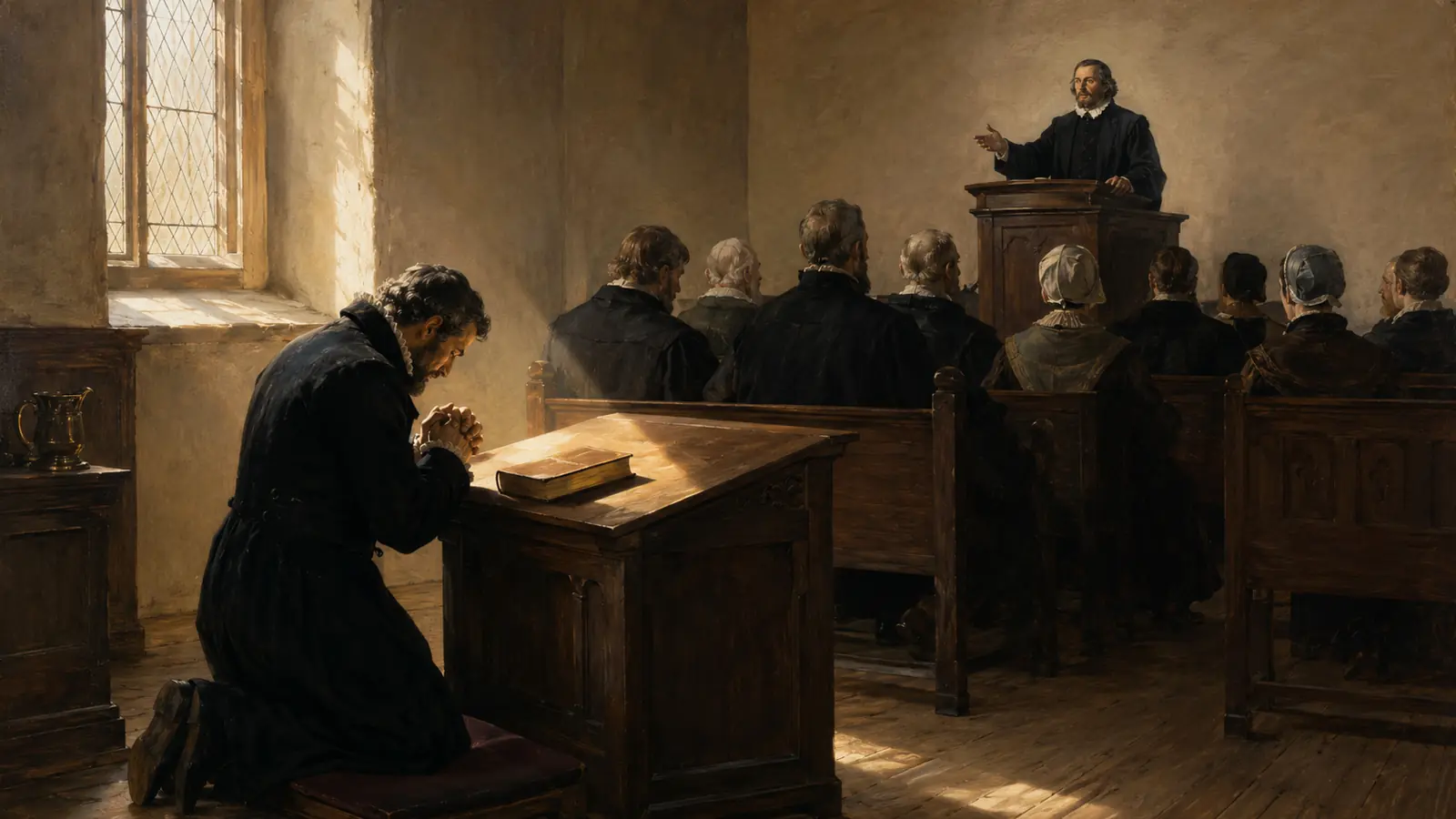
Thesis 4: The Holy Spirit sovereignly enables the elect to recognize, receive, and submit to the divine authority already inherent in Scripture. The Spirit’s internal testimony does not add authority to an otherwise uncertain text. Neither is it a private revelation that competes with the written Word. The external Word and the internal testimony of the Spirit are distinct but inseparable. The Spirit bears witness through and with the Word, causing the church to recognize the voice of its Shepherd.
Holy Scripture possesses divine authority because God speaks in it. That authority is objective. It does not depend upon the church, the scholar, or the individual believer.
Yet another question remains: How does a fallen human being come to recognize Scripture as God’s Word?
Why does one reader encounter the voice of the living God while another sees only ancient religious literature? Why does one submit while another resists? Why do historical arguments that appear compelling to one person fail to produce faith in another?
The answer is not that Scripture possesses greater authority for one reader than for another. Nor is it that the believer has reasoned more independently or attained religious neutrality. The difference lies in the sovereign work of the Holy Ghost.
The Spirit who inspired Scripture works inwardly so that sinners recognize, receive, believe, love, and obey the Word he inspired.
His testimony does not transform a merely human book into God’s Word. It does not confer authority upon an uncertain text. It changes the hearer, not the Word.
Scripture is authoritative because God speaks. The believer recognizes that authority because the Spirit opens his heart to hear.
Objective Authority and Subjective Recognition
Two questions must be carefully distinguished.
The first is ontological:
What is Scripture?
Scripture is the Word of God. Its authority arises wholly from God, who is truth itself, its author.
The second is epistemological and spiritual:
How does a sinner become fully persuaded that Scripture is the Word of God?
Through the inward work of the Holy Ghost bearing witness by and with that Word.
Confusion arises when these questions are collapsed.
If recognition creates authority, Scripture becomes authoritative only after an individual, church, or scholarly body approves it. Authority would then be subjective, derivative, and unstable. The Word would stand before its hearers as a claimant awaiting their verdict.
But if authority is affirmed without accounting for sinful blindness, Christianity may be reduced to the assumption that any sufficiently intelligent person can reason himself into saving faith through unaided study.
The Reformed doctrine avoids both errors.
Scripture possesses authority objectively because God authored it. The Spirit produces recognition subjectively because fallen man will not receive spiritual truth apart from grace.
Authority belongs to the Word. Recognition occurs in the hearer. The Holy Ghost joins the two without confusing them.
The Westminster Formulation
Westminster Confession of Faith 1.5 provides one of the richest summaries of this doctrine:1
“We may be moved and induced by the testimony of the Church to an high and reverent esteem of the Holy Scripture. And the heavenliness of the matter, the efficacy of the doctrine, the majesty of the style, the consent of all the parts, the scope of the whole—which is, to give all glory to God—the full discovery it makes of the only way of man’s salvation, the many other incomparable excellencies, and the entire perfection thereof, are arguments whereby it doth abundantly evidence itself to be the Word of God: yet notwithstanding, our full persuasion and assurance of the infallible truth and divine authority thereof, is from the inward work of the Holy Spirit bearing witness by and with the Word in our hearts.”
- The Westminster Confession of Faith 1.4–5, Orthodox Presbyterian Church. ↩
The confession refuses to choose between evidence and the Spirit.
The church’s testimony matters. Scripture’s divine qualities matter. Its doctrinal power, majesty, unity, redemptive purpose, and perfection matter. These considerations abundantly evidence Scripture to be the Word of God.
Yet none of them, considered merely as external arguments, can produce full spiritual persuasion in a fallen heart.
That persuasion comes through “the inward work of the Holy Spirit.”
The final words are especially important: the Spirit bears witness “by and with the Word.”
He does not draw the believer away from Scripture toward an independent revelation. He does not whisper a secret message that competes with the canonical text. He does not ask the Christian to believe a feeling merely because it is intense.
He works by and with the objective Word.
The Spirit and Scripture are neither separated nor confused. Scripture is the outward, public, stable revelation. The Spirit is the sovereign divine agent who opens the mind and heart to receive it.
The Spirit Who Inspired Is the Spirit Who Illumines
The doctrine of illumination rests upon the identity of the Holy Ghost.
The Spirit is not a later religious force added to an otherwise complete literary process. He is the divine author of Scripture. Holy men spoke as they were moved by the Holy Ghost, and the apostolic words were taught by the Spirit.2
The same Spirit who produced the objective revelation now works in those who hear it.
This establishes a necessary harmony. The Spirit will not contradict himself. He will not inspire one doctrine in Scripture and reveal its opposite privately. He will not lead the church beyond the Word by denying what he previously caused to be written.
Claims of spiritual guidance must therefore be tested by Scripture. The inward claim does not judge the outward Word. The outward Word judges the inward claim.
The Holy Ghost’s work may be considered under several related but distinguishable headings.
In inspiration, he caused the prophets and apostles to write God’s Word infallibly.
In regeneration, he gives spiritual life to those dead in trespasses and sins.
In illumination, he opens the understanding to apprehend the truth and glory of Scripture.
In testimony, he produces persuasion and assurance that the voice speaking in Scripture is God’s voice.
In sanctification, he applies that Word so that believers are increasingly conformed to Christ.
“The Natural Man Receiveth Not”
Paul explains the necessity of the Spirit in 1 Corinthians 2.
The things God has prepared for his people are not discovered by unaided human investigation:
“But God hath revealed them unto us by his Spirit: for the Spirit searcheth all things, yea, the deep things of God” (1 Corinthians 2:10).
- The Westminster Confession of Faith 1.4–5, Orthodox Presbyterian Church. ↩
- 1 Corinthians 2:10–14; 2 Timothy 3:16; 2 Peter 1:19–21. ↩
Paul compares the Spirit’s knowledge of God to the human spirit’s knowledge of the individual:
“For what man knoweth the things of a man, save the spirit of man which is in him? even so the things of God knoweth no man, but the Spirit of God” (verse 11).
- The Westminster Confession of Faith 1.4–5, Orthodox Presbyterian Church. ↩
- 1 Corinthians 2:10–14; 2 Timothy 3:16; 2 Peter 1:19–21. ↩
The church has received the Spirit “that we might know the things that are freely given to us of God” (verse 12).
Paul then identifies the obstacle:
“But the natural man receiveth not the things of the Spirit of God: for they are foolishness unto him: neither can he know them, because they are spiritually discerned” (verse 14).
- The Westminster Confession of Faith 1.4–5, Orthodox Presbyterian Church. ↩
- 1 Corinthians 2:10–14; 2 Timothy 3:16; 2 Peter 1:19–21. ↩
The problem is not that the words are physically inaudible or grammatically meaningless. An unbeliever may learn Hebrew and Greek, analyze syntax, identify literary structures, and describe theological positions accurately. The natural man can possess extensive notional knowledge about Scripture.
Paul speaks of spiritual reception and discernment. The natural man does not embrace the things of God according to their true divine character and saving significance. He regards them as foolishness because his mind and affections remain alienated from God.
This distinction prevents a common misunderstanding. The doctrine of illumination does not imply that unbelievers cannot understand any proposition written in Scripture. It means that saving, reverent, submissive knowledge requires the Spirit.
A man may explain the doctrine of justification while refusing to rest in Christ. He may lecture upon divine holiness while hating the God whose holiness he describes. He may analyze Scripture as an historical object while refusing to hear it as the present voice of his Creator.
Illumination is more than intellectual decoding. It is the Spirit’s work of bringing the whole person into faithful contact with divine truth.
The Opening of the Heart
Acts 16 gives the pattern in one scene. Paul preached the public apostolic Word, and “the Lord opened” Lydia’s heart so that she attended to it in faith.3 Her response did not make the message true; grace altered her relation to truth already spoken. Rationalism treats outward information as sufficient, while enthusiasm seeks an inward operation detached from the Word. Acts presents neither. The Word is preached, and the Lord opens the heart to receive it.
“My Sheep Hear My Voice”
Christ describes his relationship with his people in covenantal and personal terms:4
“My sheep hear my voice, and I know them, and they follow me” (John 10:27).
- The Westminster Confession of Faith 1.4–5, Orthodox Presbyterian Church. ↩
- 1 Corinthians 2:10–14; 2 Timothy 3:16; 2 Peter 1:19–21. ↩
- Acts 16:13–15; compare Luke 24:45 and 2 Corinthians 4:6. ↩
- John 10:3–5, 27–30; 1 John 2:18–27. ↩
The sheep do not create the Shepherd’s voice. They recognize it.
Christ’s voice possesses authority whether heard or rejected. But those whom he knows respond to his call. Their hearing results in following.
This recognition is not mere familiarity with a certain literary style. It is covenantal recognition produced by grace. The sheep hear the voice of the One who calls them by name, gives them eternal life, and keeps them from destruction.
This text helps explain why the testimony of the Spirit cannot be reduced to a formal syllogism. The believer’s knowledge of Scripture is not less than rational, but it is more than detached reasoning. It is the recognition of a person speaking in his Word.
The believer does not merely conclude that a deity probably authored a religious document. He hears the voice of his Shepherd.
This recognition also has an ecclesiastical dimension. Christ gathers a flock. The Spirit’s testimony is not designed to produce millions of isolated religious authorities, each possessing an autonomous revelation. He causes Christ’s people corporately to receive, confess, read, preach, and obey the one canonical Word.
The church’s historic reception does not create Scripture, but it is a providentially significant manifestation of the Shepherd gathering his sheep around his voice.
The Anointing That Teaches
John tells believers facing deceivers that they possess an anointing from the Holy One and that this anointing teaches them.4 He cannot mean that Christians need no human teachers; his own letter teaches them, and Christ gives teachers to the church. The point is that they are not dependent upon the deceivers’ supposedly superior knowledge. The Spirit confirms them in the apostolic message heard “from the beginning.” He supplies no second canon and no permission to contradict the written Word. The Spirit of truth bears witness to the Word of truth.
Objective Light and Internal Illumination
John Owen distinguished the objective revelation from the inward light necessary to receive it.5
He described the gospel as the means of revelation, “the objective light whereby the perception and knowledge” of God in Christ is conveyed to the mind. He then distinguished this from “the internal light of the mind in the saving illumination of the Holy Spirit,” enabling believers spiritually to behold the glory of God in the face of Christ.
Both are necessary, but they perform different functions.
Without the objective light of Scripture, the mind has no divinely appointed revelation of Christ to behold.
Without the internal illumination of the Spirit, the fallen mind does not behold Christ’s glory savingly.
Owen makes the same distinction in his catechism. When he asks how believers know the Scriptures to be the Word of God, he answers:
“By the testimony of God’s Spirit working faith in my heart to close with that heavenly majesty, and clear divine truth, that shineth in them.”
- The Westminster Confession of Faith 1.4–5, Orthodox Presbyterian Church. ↩
- 1 Corinthians 2:10–14; 2 Timothy 3:16; 2 Peter 1:19–21. ↩
- Acts 16:13–15; compare Luke 24:45 and 2 Corinthians 4:6. ↩
- John 10:3–5, 27–30; 1 John 2:18–27. ↩
- John Owen, The Works of John Owen, vol. 1, on the objective light of the gospel and the inward illumination of the Spirit; supplied PDF. See also Owen’s catechetical treatment of Scripture’s divine majesty and the Spirit’s testimony. ↩
Notice the relationship.
Majesty and divine truth shine in Scripture. They are objective qualities of the Word. The Spirit works faith in the heart so that the believer closes with—recognizes, embraces, and submits to—what shines there.
Owen also acknowledges external evidences: antiquity, preservation, prophecy, holiness, majesty, miracles, the testimony of the church through the ages, and the blood of the martyrs. These are genuine arguments. But he distinguishes them from the Spirit’s inward conviction.
Evidence may present the light. The Spirit gives sight.
The Spirit Does Not Supply Missing Authority
The doctrine of inward testimony must not be formulated as though Scripture were objectively uncertain until the Spirit adds authority to it.
That would make divine authority dependent upon religious experience. Scripture would be the Word of God for the person who feels persuaded but not for the person who does not.
The biblical order is different.
The Word possesses authority before the Spirit brings a person to faith. The unbeliever is accountable precisely because he rejects genuine revelation. If Scripture possessed no authority for him until inwardly authenticated, unbelief would carry no guilt.
The Spirit does not place a divine seal upon a book that previously lacked one. Scripture already bears the marks and authority of its divine origin. The Spirit heals the sinner’s blindness and rebellion.
This distinction also protects assurance. If authority depended upon the intensity of the believer’s present experience, doubt would continually threaten the identity of Scripture. A season of spiritual dryness might appear to deprive the Word of authority.
But the foundation is not the believer’s emotional condition.
God has spoken whether the believer feels strong or weak. Scripture remains true when the heart trembles. The Spirit’s work establishes faith upon the objective Word rather than making faith rest upon its own inward temperature.
Christian assurance is not faith in an experience. It is Spirit-wrought confidence in God’s promise.
The Testimony Is Not a Private Revelation
The Spirit’s inward testimony is sometimes confused with private revelation.
A person may say, “The Spirit told me this verse is inspired,” or, “I felt inwardly that this particular textual reading is correct.” Such impressions are then treated as beyond examination.
This is not the Reformed doctrine.
The Spirit’s testimony is not a new verbal revelation alongside Scripture. It does not communicate additional canonical propositions. It does not authorize a believer to add commandments, predictions, or doctrines to the written Word.
Neither does it make personal impressions infallible. Christians may mistake emotion, intuition, habit, fear, or preference for divine guidance. Every inward claim must be tested by Scripture.
The Spirit bears witness “by and with the Word.” He directs attention toward the divine truth already revealed. He persuades the mind of its truth, inclines the affections toward its goodness, and bends the will toward obedience.
The difference is decisive.
Private revelation says, “God has given me a new message.”
The inward testimony says, “This written Word is truly God speaking, and I must believe him.”
Illumination Is Not an Inspired Interpretation
Illumination does not make every Christian interpretation correct.
Spirit-filled believers may misunderstand passages. They may import traditions into the text, overlook context, mishandle grammar, or draw faulty conclusions. Peter himself was corrected by Paul. Churches addressed by apostles contained serious doctrinal and practical errors.
The Spirit’s presence does not erase human finitude or immediately perfect sanctification.
Illumination gives the capacity and disposition to receive spiritual truth, but believers must still study. They must compare Scripture with Scripture, attend to grammar and context, hear faithful teachers, learn from the church’s history, and correct their judgments.
The Spirit ordinarily works through these means.
This protects the doctrine from becoming a shortcut around scholarship. A person cannot replace exegesis by announcing, “The Spirit showed me.” The claim must be demonstrated from the Word.
It also protects the church from spiritual tyranny. A teacher who identifies his interpretation with the immediate testimony of the Spirit attempts to place himself beyond correction. By doing so, he functionally elevates his private judgment above Scripture.
The faithful teacher says, “Examine what I teach by the Word.”
The Spirit and the Evidences of Scripture
The Spirit’s testimony does not make external evidence useless.
Louis Gaussen distinguished the historical study of Scripture from the foundation of living faith. He valued the church’s historical testimony and the evidence supporting the canon, but warned that such evidence cannot by itself impart living faith. Scripture becomes operative in the believer through the Holy Ghost.6
This is essentially Westminster’s balance.
The evidences are abundant. They can move and induce. They may remove misunderstandings, answer historical objections, and show that Christian faith is not an irrational leap.
But no accumulation of external evidence can regenerate a sinner.
The natural man’s problem is not simply that he lacks one more archaeological discovery. If evidence alone produced faith, those who witnessed Christ’s miracles would all have believed. Instead, some explained the works of the Spirit as the works of Satan.
The Spirit does not compensate for deficient evidence. He overcomes sinful resistance to the sufficient revelation God has given.
The Christian may therefore pursue evidence confidently while refusing to make faith depend upon the latest scholarly consensus.
Every fact belongs to God. But only God can give eyes to see facts rightly.
Does This Reduce Faith to Subjectivity?
The strongest objection argues that inward testimony makes religious certainty subjective. Christians claim the Spirit confirms the Bible; adherents of other religions claim similar experiences. How can one claim be distinguished from another?
The answer is that the Christian doctrine never isolates the inward testimony from the objective Word.
The believer is not told to trust an undefined spiritual feeling. The Spirit bears witness through a publicly available canonical revelation with definite historical, theological, moral, and redemptive content.
The inward testimony must therefore be considered together with:
- the self-attesting authority of Scripture;
- the divine qualities evident throughout the Word;
- the historical revelation culminating in Jesus Christ;
- the doctrinal unity of the canon;
- the objective work of Christ in history;
- the public apostolic proclamation;
- the providential reception of Scripture by the church;
- and the inability of rival worldviews to account for knowledge, morality, and religious experience on their own foundations.
The Spirit’s testimony is personal, but it is not autonomous. It joins the believer to an objective Word, an objective Christ, an objective gospel, and a visible covenant community.
A subjective experience without an objective divine Word cannot authenticate itself. The Christian does not believe the Bible because he has had a generic spiritual sensation. He believes because the Spirit opens him to recognize God speaking in Scripture.
Why Do Christians Disagree?
If believers possess the Spirit, why do they disagree about doctrine, canon, translation, and textual readings?
Because the Spirit’s testimony does not make every believer omniscient or sinless.
Christians possess different degrees of knowledge, maturity, opportunity, linguistic competence, and freedom from inherited error. They may resist implications of truths they otherwise confess. Institutional loyalties, intellectual fashions, fear, pride, and carelessness can influence believers as well as unbelievers.
The Spirit’s work guarantees neither immediate unanimity nor individual infallibility.
Yet disagreement does not render his testimony unreal. Christians across denominations and centuries confess the central canonical revelation of the triune God, creation, fall, incarnation, atonement, resurrection, judgment, and salvation through Christ. This substantial unity is not erased by genuine secondary disagreements.
Textual disputes require especially careful qualification. The inward testimony does not ordinarily identify each disputed letter through immediate revelation. Particular readings must be examined ministerially through the whole doctrine of Scripture, the coherence of the reading with the canonical Word, the history of ecclesiastical reception, and the relevant textual evidence.
A Christian cannot settle a variant by declaring that the Spirit privately told him which reading is correct.
But neither should the Spirit’s historic work in causing the church to receive and use the preserved text be treated as irrelevant. Individual intuition is not the same as providential ecclesiastical recognition.
The relationship between these realities will be developed in the articles on canon, textual recognition, and reception.
Word Without Spirit and Spirit Without Word
Two recurring errors threaten the church.
The first is Word without Spirit.
This error treats Scripture as an object that can be mastered by unaided intellect. It may produce precise linguistic analysis and extensive historical learning while failing to hear the voice of God. Theology becomes the management of religious information rather than reverent knowledge of the triune God.
The second is Spirit without Word.
This error pursues impressions, impulses, ecstatic experiences, and new revelations while neglecting the written standard. It makes the believer’s inward life the practical final authority.
The first produces rationalistic deadness. The second produces enthusiastic disorder.
The Reformed doctrine confesses Word and Spirit together.
The Word supplies the objective truth. The Spirit gives spiritual sight.
The Word governs the claim of illumination. The Spirit makes the Word effectual.
The Word directs the believer to Christ. The Spirit reveals Christ’s glory through the Word.
What God has joined together must not be divided.
The Pastoral Importance of the Doctrine
The inward testimony of the Spirit is not an abstract solution to an epistemological problem. It is essential to the life of the church.
Preacher and hearer depend upon the Spirit: eloquence cannot regenerate, and familiarity is not saving faith. Both must labor under the Word while asking God for understanding and obedience.
The doubting believer depends upon the Spirit because final assurance cannot rest upon his ability to answer every skeptical objection. Historical and apologetic study may help, but his faith ultimately rests upon God speaking in the Word.
The church depends upon the Spirit because confessional fidelity cannot be maintained by institutional machinery alone. Seminaries, sessions, synods, and publishing houses may preserve correct formulas outwardly while losing their spiritual substance.
The textual scholar depends upon the Spirit because technical expertise does not guarantee faithful submission. He must handle Scripture as a servant under the Word, not as a magistrate standing over it.
The Spirit ordinarily blesses careful reading, faithful preaching, disciplined study, ecclesiastical confession, and the comparison of Scripture with Scripture.
Conclusion: The Spirit Opens the Ear
Scripture does not become the Word of God when the Spirit testifies to it. It is the Word of God because he inspired it.
The Spirit’s testimony does not alter Scripture’s authority. It alters the sinner.
He opens blind eyes to see the divine light shining in the Word. He opens deaf ears to hear the Shepherd’s voice. He opens hardened hearts to receive what they formerly resisted. He produces faith, assurance, love, and obedience.
The testimony is inward, but it is not independent.
It is personal, but not private revelation.
It is supernatural, but not irrational.
It produces certainty, but not individual infallibility.
It works through the Word, never against it.
Confessional Bibliology therefore confesses:
The Father has spoken through the Son.
The Holy Ghost caused that Word to be written.
Scripture possesses divine authority before we recognize it.
The Spirit bears witness by and with the Word in our hearts.
He does not create Scripture’s authority; he enables us to receive it.
The sheep hear the Shepherd’s voice and follow him.
- The Westminster Confession of Faith 1.4–5, Orthodox Presbyterian Church. ↩
- 1 Corinthians 2:10–14; 2 Timothy 3:16; 2 Peter 1:19–21. ↩
- Acts 16:13–15; compare Luke 24:45 and 2 Corinthians 4:6. ↩
- John 10:3–5, 27–30; 1 John 2:18–27. ↩
- John Owen, The Works of John Owen, vol. 1, on the objective light of the gospel and the inward illumination of the Spirit; supplied PDF. See also Owen’s catechetical treatment of Scripture’s divine majesty and the Spirit’s testimony. ↩
- Louis Gaussen, The Canon of the Holy Scriptures Examined in the Light of History, especially the preface and introductory distinction between historical evidence and living faith; supplied PDF and EPUB. ↩
Notes and Further Reading
- The Westminster Confession of Faith 1.4–5, Orthodox Presbyterian Church. ↩
- 1 Corinthians 2:10–14; 2 Timothy 3:16; 2 Peter 1:19–21. ↩
- Acts 16:13–15; compare Luke 24:45 and 2 Corinthians 4:6. ↩
- John 10:3–5, 27–30; 1 John 2:18–27. ↩
- John Owen, The Works of John Owen, vol. 1, on the objective light of the gospel and the inward illumination of the Spirit; supplied PDF. See also Owen’s catechetical treatment of Scripture’s divine majesty and the Spirit’s testimony. ↩
- Louis Gaussen, The Canon of the Holy Scriptures Examined in the Light of History, especially the preface and introductory distinction between historical evidence and living faith; supplied PDF and EPUB. ↩
Comments
Share a question or response to this article.