

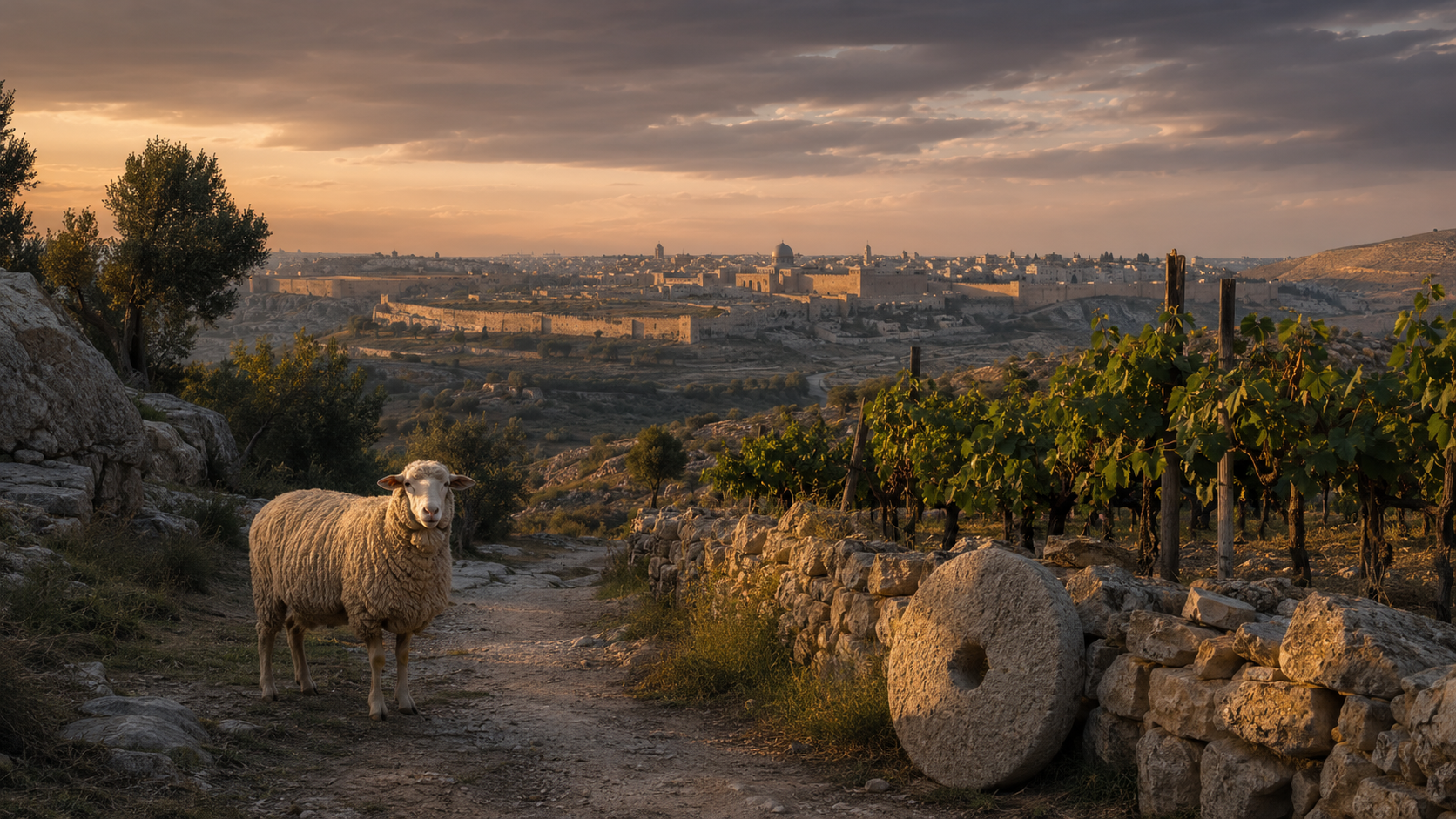
“Are ye able to drink of the cup that I shall drink of, and to be baptized with the baptism that I am baptized with?” — Matthew 20:22
The mother of James and John asks for thrones. Jesus answers with a cup and, in the received text, a baptism. Critical editions omit the baptism clauses in verses 22 and 23 because Mark 10:38–39 contains them and several strong early Matthew witnesses do not.
The cup remains in every form. The dispute is whether Matthew also recorded the second image.
Two images of one suffering
The cup is the portion appointed by the Father. In Gethsemane Jesus will pray, “Let this cup pass from me,” and then drink it in obedience. Baptism pictures overwhelming waters: suffering into which a person is plunged.
Together the images are not needless doubles. The cup is received and drunk; the baptism surrounds and covers. The sons of Zebedee answer too quickly, “We are able.” Jesus promises that they will share his sufferings, though the seats of glory remain the Father’s gift.
The critical case is strong and simple. Mark has the full cup-and-baptism form. Matthew’s shorter early witnesses can be read as original, with later copyists importing Mark’s richer wording. The varied exact forms of the added clauses support that suspicion.
Yet Matthew often preserves paired images, and Jesus may have spoken both once. A scribe who saw the repeated “and be baptized with the baptism” could omit the longer parallel member to make the answer move faster. The cup alone leaves complete grammar, so no scar exposes the loss.
Sharing is not atoning
James and John can drink Christ’s cup and receive his baptism only as disciples. They cannot bear sin as substitutes or add to his finished ransom, which Jesus names in verse 28. His suffering redeems; theirs witnesses.
That distinction keeps the full reading from feeding a false doctrine of co-redemption. Christ’s people are united to him and may suffer for him, but the Son of man alone gives his life a ransom for many.
The received double image has broad use, matches Mark’s historical report, and gives a balanced answer in both verses. Harmonization is possible; shared apostolic memory is also possible. The church need not cut Matthew down to avoid agreement. Christ named both the cup and the baptism, then walked ahead to endure what the ambitious disciples did not yet understand.
James and John answer “We are able” before the Gospel has shown Gethsemane. Their confidence measures suffering by ambition. Jesus does not praise the boast, but he prophesies costly discipleship: James will die by Herod’s sword, and John will endure his own long witness.
The baptism image has deep biblical roots in overwhelming waters. Psalms use floods for mortal distress; Jesus later speaks of a baptism he must undergo. The metaphor is therefore at home in his speech and not a decorative duplicate of the cup.
The clause’s omission may also follow rhetorical compression. Once the cup is retained, the question and answer are complete. A copyist who remembers Matthew’s shorter style beside Mark can allow one image to carry the whole. Smoothness again explains survival without proving priority.
Sources and further reading
- Psalm 69:1–2; Matthew 20:17–28; 26:36–46; Mark 10:32–45.
- Bruce M. Metzger, A Textual Commentary on the Greek New Testament, note on Matthew 20:22–23.
- Frederick H. A. Scrivener, A Plain Introduction to the Criticism of the New Testament.
Comments
Share a question or response to this article.