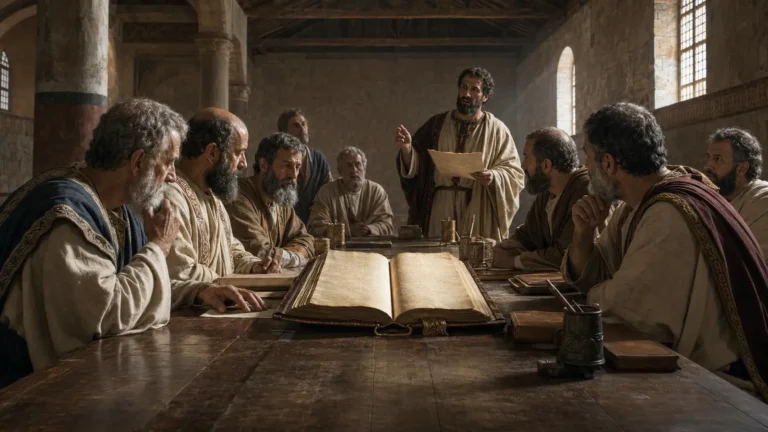
Begotten, Not Made
Arius could call Christ begotten while treating that begetting as creaturely production. Nicaea’s ‘not made’ guarded the scriptural boundary between the natural Son and every work made through…
Open record →
Principles, methods, evidence, and criticism concerning the biblical text.
Arius could call Christ begotten while treating that begetting as creaturely production. Nicaea’s ‘not made’ guarded the scriptural boundary between the natural Son and every work made through…
Open record →The most reassuring sentence in popular textual apologetics is also among the least examined. After acknowledging hundreds of differences between the Authorized Version and modern translations, Wesley Huff…
Open record →A textual canon is a bridge from an observed feature to a judgment of priority. This article classifies the main canons and shows why the hidden premises in…
Open record →Westminster Confession 1.5–1.7 teaches that Scripture manifests itself as God's Word, contains the whole counsel necessary for faith and life, and is clear in all things necessary to…
Open record →Sedgwick provides the clearest classical map for understanding error, fundamental doctrine, direct heresy, and heresy by consequence.
Open record →Arius placed the Son before the ages but still gave him a beginning. Scripture’s answer is not merely that Christ is very old, but that the eternal Word…
Open record →