

“That it might be fulfilled which was spoken by the prophet.” — Matthew 13:35
The prophet is unnamed in the received text. A few witnesses name Isaiah, although the words come from Psalm 78:2, a psalm of Asaph. The second question comes at the end of the quotation: did Matthew write “from the foundation,” or “from the foundation of the world”?
These two details have different weights. The anonymous formula is secure. “Of the world” has a serious early omission, though both the received text and many modern editions print it, sometimes with brackets.
An unnamed prophet
Matthew writes διὰ τοῦ προφήτου, “through the prophet.” Naming Isaiah creates an obvious historical problem. Yet that bad name is precisely what makes it attractive to some critics: a scribe would correct Isaiah, they argue, but would not invent him.
The simpler account begins with Matthew’s anonymous wording. A reader accustomed to Isaiah’s prominence in the Gospel supplies the famous prophet’s name in a margin. The same habit appears elsewhere, where unnamed prophetic formulas attract names—sometimes correct, sometimes not. No known Greek manuscript reads Asaph here, despite the psalm’s heading. The error “Isaiah” therefore points back to an empty space more readily than to an original named prophet.
Matthew often uses “the prophet” without a name. The received form is both his habit and the only form that states the citation truthfully without assuming that the Evangelist copied an error.
From the foundation of the world
The Textus Receptus ends ἀπὸ καταβολῆς κόσμου. The final noun is absent from some early witnesses, and critics suggest that it was brought in from Matthew 25:34. Yet “from the foundation” invites the expected complement. That very expectation can work in either direction: a scribe may add “world,” or an eye may pass over a familiar closing word because the sense already seems complete.
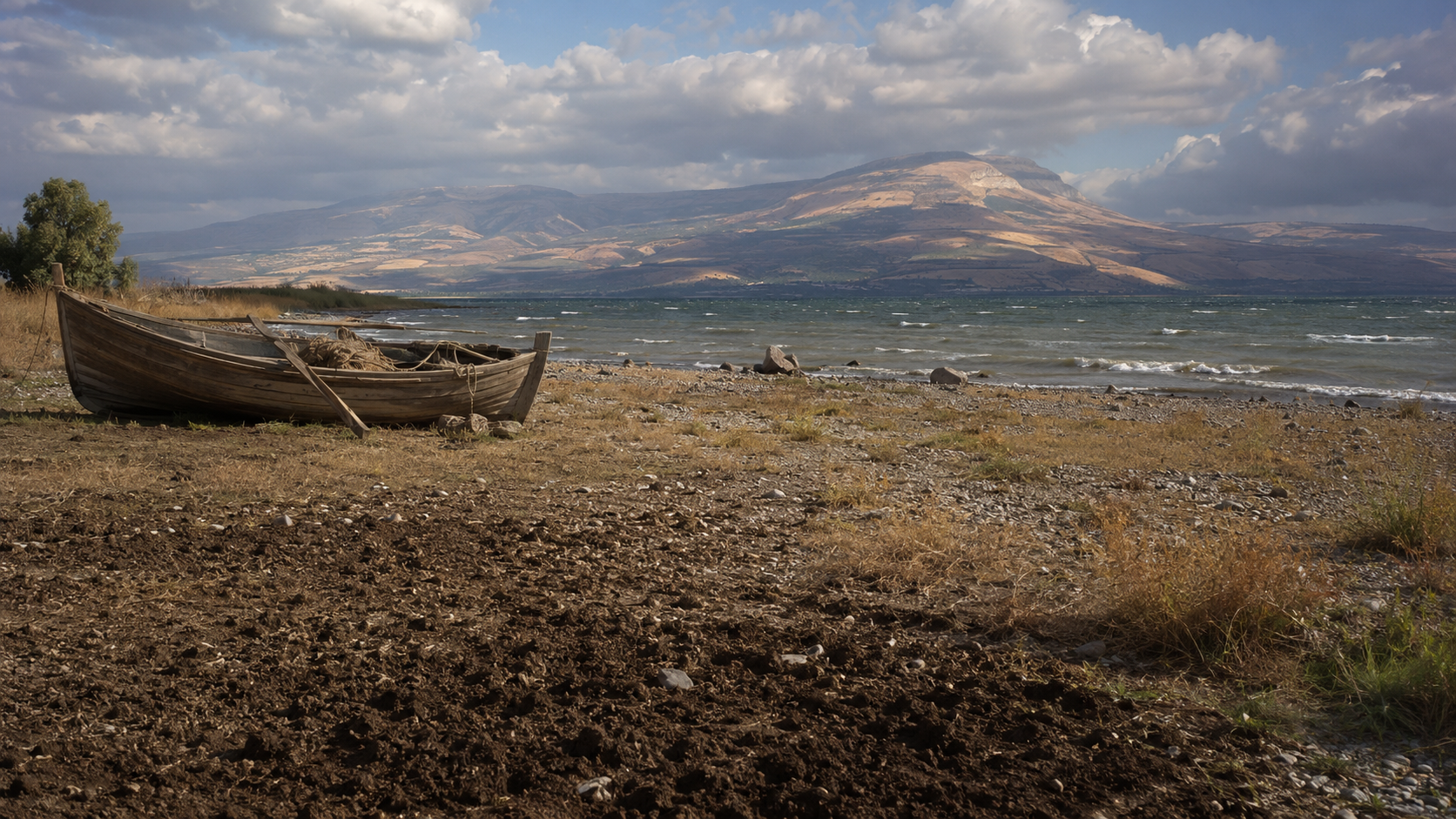
The full phrase is common New Testament speech. Here it gives the parables a long reach. Christ is not inventing riddles for one afternoon by the sea. He utters things hidden from the world’s foundation and brings the ancient purpose of God into the open.
The received text should stand in both places: “by the prophet” and “from the foundation of the world.” The first reading avoids a name that the manuscripts themselves cannot keep straight. The second completes Matthew’s temporal phrase and has the breadth and continuity expected of his text.
Psalm 78 begins by calling the people to hear a law and incline their ears to the words of a mouth. Its “parable” recounts Israel’s stubborn history so that a coming generation will set hope in God. Matthew’s use is therefore more than a prediction that Jesus would tell riddles. The Messiah opens the hidden shape of God’s kingdom within Israel’s story.
“From the foundation of the world” widens that claim beyond the psalmist’s lifetime. The kingdom mysteries are old in God’s purpose and newly uttered in the Son’s teaching. Omitting world leaves the temporal idea, but the full phrase gives it a stated horizon.
The absent Asaph reading is also a warning against arguments from imagined documents. A proposed history may be clever—Asaph changed to Isaiah, Isaiah then removed—but no surviving witness carries the first step. The anonymous text explains the attested evidence without building upon an unattested name.
Sources and further reading
- Matthew 1:22; 2:5; 13:34–35; 25:34; Psalm 78:1–2.
- Bruce M. Metzger, A Textual Commentary on the Greek New Testament, notes on Matthew 13:35.
- John William Burgon, The Causes of the Corruption of the Traditional Text of the Holy Gospels.
Comments
Share a question or response to this article.